No matter what problem you encounter, whether it's a grand challenge for humanity or a personal problem of your own, there's an idea out there that can overcome it. And you can find that idea.
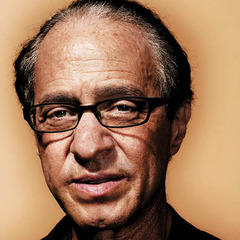
Ray KurzweilRead
31 quotes
No matter what problem you encounter, whether it's a grand challenge for humanity or a personal problem of your own, there's an idea out there that can overcome it. And you can find that idea.
When I was a student at MIT, we all shared one computer and it took up a whole building. The computer in your cell phone today is a million times cheaper and a thousand times more powerful. What now fits in your pocket 25 years from now will fit into a blood cell and will again be millions of times more cost effective.
A successful person isn't necessarily better than her less successful peers at solving problems; her pattern-recognition facilities have just learned what problems are worth solving.
When you talk to a human in 2035, you'll be talking to someone that's a combination of biological and non-biological intelligence.
Mobile phones are misnamed. They should be called gateways to human knowledge.
I'm working on artificial intelligence. Actually, natural language understanding, which is to get computers to understand the meaning of documents.
So what used to fit in a building now fits in your pocket, what fits in your pocket now will fit inside a blood cell in 25 years.
If you write a blog post, you've got something to say; you're not just creating words and synonyms. We'd like the computers to actually pick up on that semantic meaning.
By 2009, computers will disappear. Displays will be written directly onto our retinas by devices in our eyeglasses and contact lenses.
What we spend our time on is probably the most important decision we make.
Artificial intelligence will reach human levels by around 2029. Follow that out further to, say, 2045, we will have multiplied the intelligence, the human biological machine intelligence of our civilization a billion-fold.
We only have to capture 1/10,000th of the solar energy landing on earth to completely satisfy all our energy needs.
It is doubling now every two years. Doubling every two years means multiplying by 1,000 in 20 years. At that rate we'll meet 100 percent of our energy needs in 20 years.
Doing real world projects is, I think, the best way to learn and also to engage the world and find out what the world is all about.
A lot of movies about artificial intelligence envision that AI's will be very intelligent but missing some key emotional qualities of humans and therefore turn out to be very dangerous.
By 2029, computers will have emotional intelligence and be convincing as people.
I'm an inventor. I became interested in long-term trends because an invention has to make sense in the world in which it is finished, not the world in which it is started.
Take death for example. A great deal of our effort goes into avoiding it. We make extraordinary efforts to delay it, and often consider its intrusion a tragic event. Yet we'd find it hard to live without it. Death gives meaning to our lives. It gives importance and value to time. Time would become meaningless if there were too much of it.
By 2010 computers will disappear. They'll be so small, they'll be embedded in our clothing, in our environment. Images will be written directly to our retina, providing full-immersion virtual reality, augmented real reality. We'll be interacting with virtual personalities.
People say we're running out of energy. That's only true if we stick with these old 19th century technologies. We are awash in energy from the sunlight.
Sometimes people talk about conflict between humans and machines, and you can see that in a lot of science fiction. But the machines we're creating are not some invasion from Mars. We create these tools to expand our own reach.
Subscribe for the occasional hand-picked quote. No noise.