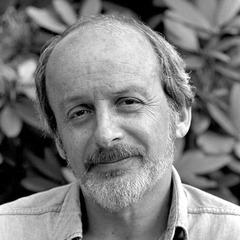
We're always attracted to the edges of what we are, out by the edges where it's a little raw and nervy.
E. L. DoctorowRead
28 quotes
We're always attracted to the edges of what we are, out by the edges where it's a little raw and nervy.
One of the things I had to learn as a writer was to trust the act of writing. To put myself in the position of writing to find out what I was writing.
In fiction, you know, there are no borders. You can go anywhere.
Books are acts of composition: you compose them. You make music: the music is called fiction.
We are all good friends. Friendship is what endures. Shared ideals, respect for the whole character of a human being.
I've known several cases of writers who decide to write about something and they research the hell out of it and when they're ready to write, they can't move because they are so burdened. I start writing. Whatever I need somehow comes to hand.
Things that appear on the front page of the newspaper as 'fact' are far more dangerous than the games played by a novelist, and can lead to wars.
My memories pale as I prevail upon them again and again. They become more and more ghostly. I fear nothing so much as losing them altogether and having only my blank endless mind to live in.
I like commas. I detest semi-colons - I don't think they belong in a story. And I gave up quotation marks long ago. I found I didn't need them, they were fly-specks on the page.
When I'm writing, I like to seal everything off and face the wall, not to look outside the window. The only way out is through the sentences.
The important thing is not to be too comfortable when you're writing. Noise in the street? That's good. The computer goes down? That's good. All these things are good. It has to be a little bit of a struggle.
One of the things I had to learn as a writer was to trust the act of writing. To put myself in the position of writing to find out what I was writing. I did that with 'World's Fair,' as with all of them. The inventions of the book come as discoveries.
Writing is like driving at night in the fog. You can only see as far as your headlights, but you can make the whole trip that way.
My sense of what a book should be has changed so radically. I like to think for the better.
I don't think anything I've written has been done in under six or eight drafts. Usually it takes me a few years to write a book. 'World's Fair' was an exception. It seemed to be a particularly fluent book as it came. I did it in seven months. I think what happened in that case is that God gave me a bonus book.
I began to ask two questions while I was reading a book that excited me: not only what was going to happen next, but how is this done? How is it that these words on the page make me feel the way I'm feeling? This is the line of inquiry that I think happens in a child's mind, without him even knowing he has aspirations as a writer.
The nature of good fiction is that it dwells in ambiguity.
Most people are quiet in the world, and live in it tentatively, as if it were not their own.
The three most important documents a free society gives are a birth certificate, a passport, and a library card.
In the twentieth century one of the most personal relationships to have developed is that of the person and the state. It's become a fact of life that governments have become very intimate with people, most always to their detriment.
Writing is a socially acceptable form of schizophrenia.
Subscribe for the occasional hand-picked quote. No noise.