At the time I begin writing a novel, the last thing I want to do is follow a plot outline. To know too much at the start takes the pleasure out of discovering what the book is about.
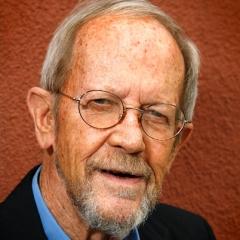
Elmore LeonardRead
21 quotes
At the time I begin writing a novel, the last thing I want to do is follow a plot outline. To know too much at the start takes the pleasure out of discovering what the book is about.
If you take a few days to write an outline, you're just making up scenes that you think will work, that you think will be interesting. But as you write it, other ideas occur - better ideas that have to do with what you're writing.
A friend of mine who is in the publishing business knew I was writing a book, and he said, 'Have you said anything yet about the good guy? Because I know you spend so much time with the bad guys.' Because they're fun. So then you have to make the good guy fun, in order to compete. That's the challenge.
Really, when I write a book I'm the only one I have to please. That's the beauty of writing a book instead of a screenplay.
Sometimes female characters start out as the wife or girlfriend, but then I realize, 'No, she's the book,' and she becomes a main character. I surrender the book to her.
I really - I don't take my work that seriously, and I think that's what keeps me loose. If I try to write, if I catch myself trying to write, I'll fall right on my face. I'll see it. If I see in the prose that I'm - 'Boy, look at me writing,' I rewrite it. I rewrite it because I don't, because I think it's distracting.
There are some people who have been reading me for years, and they keep saying kind things about the writing. That's what you're writing for, to get people to respond to it.
I think the best advice I give is to try not to write. Try not to overwrite, try not to make it sound too good. Just use your own voice. Use your own style of putting it down.
People ask me, 'Why are you still writing books?' Like I'm still only writing to make money and as soon as I have enough I'll quit and go fishing? I like to write books. It's the most satisfying thing I do.
I never know what I'm going to write next. If I'm still writing the book but I'm very near the end, and I begin to think of what I'd like to do next, then I'll know that what I'm writing is in hand. I'll think of an ending and it will be fine.
I don't judge in my books. I don't have to have the antagonist get shot or the protagonist win. It's just how it comes out. I'm just telling a story.
I don't want the reader to be aware of me as the writer.
Keep your exclamation points under control. You are allowed no more than two or three per 100,000 words of prose.
After 58 years you'd think writing would get easier. It doesn't. If you're lucky, you become harder to please. That's all right, it's still a pleasure.
My most important rule is one that sums up the 10: If it sounds like writing, I rewrite it.
Never use an adverb to modify the verb 'said' . . . he admonished gravely. To use an adverb this way (or almost any way) is a mortal sin. The writer is now exposing himself in earnest, using a word that distracts and can interrupt the rhythm of the exchange.
My most important piece of advice to all you would-be writers: when you write, try to leave out all the parts readers skip.
I never see my bad guys as simply bad. They want pretty much the same thing that you and I want: they want to be happy.
I have fun writing. I don't make it a chore. I don't have to struggle with it.
Everyone has his own sound. I'm not going to presume how to tell anybody how to write.
I'm very much aware in the writing of dialogue, or even in the narrative too, of a rhythm. There has to be a rhythm with it … Interviewers have said, you like jazz, don’t you? Because we can hear it in your writing. And I thought that was a compliment.
Subscribe for the occasional hand-picked quote. No noise.