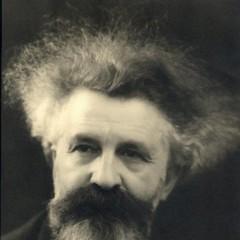
Childhood lasts all through life. It returns to animate broad sections of adult life... Poets will help us to find this living childhood within us, this permanent, durable immobile world.
Gaston BachelardRead
47 quotes
Childhood lasts all through life. It returns to animate broad sections of adult life... Poets will help us to find this living childhood within us, this permanent, durable immobile world.
Of course, any simplification runs the risk of mutilating reality; but it helps us establish perspectives.
Nobody knows that in reading we are re-living our temptations to be a poet. All readers who have a certain passion for reading, nurture and repress, through reading, the desire to become a writer.
Ideas are refined and multiplied in the commerce of minds. In their splendor, images effect a very simple communion of souls.
In order to dream so far, is it enough to read? Isn't it necessary to write? Write as in our schoolboy past, in those days when, as Bonnoure says, the letters wrote themselves one by one, either in their gibbosity or else in their pretentious elegance? In those days, spelling was a drama, our drama of culture at work in the interior of a word.
How is it possible not to feel that there is communication between our solitude as a dreamer and the solitudes of childhood? And it is no accident that, in a tranquil reverie, we often follow the slope which returns us to our childhood solitudes.
The reverie we intend to study is poetic reverie. This is a reverie which poetry puts on the right track, the track an expanding consciousness follows. This reverie is written, or, at least, promises to be written. It is already facing the great universe of the blank page. Then images begin to compose and fall into place.
Here is Menard's own intimate forest: 'Now I am traversed by bridle paths, under the seal of sun and shade...I live in great density...Shelter lures me. I slump down into the thick foliage...In the forest, I am my entire self. Everything is possible in my heart just as it is in the hiding places in ravines. Thickly wooded distance separates me from moral codes and cities.
A special kind of beauty exists which is born in language, of language, and for language.
The dream remains overloaded with the badly lived passions of daytime life. Solitude in the nocturnal dream is always a hostility. It is strange. It isn't really our solitude.
Words, in their distant past, have the past of my reveries.
All the senses awaken and fall into harmony in poetic reverie. Poetic reverie listens to this polyphony of the senses, and the poetic consciousness must record it.
We believe we can also show that words do not have exactly the same psychic "weight" depending on whether they belong to the language of reverie or to the language of daylight life-to rested language or language under surveillance-to the language of natural poetry or to the language hammered out by authoritarian prosodies.
One must live to build one's house, and not build one's house to live in.
Nothing is forgotten in the processes of idealization. Reveries of idealization develop, not by letting oneself be taken in by memories, but by constantly dreaming the values of a being whom one would love. And that is the way a great dreamer dreams his double. His magnified double sustains him.
Any work of science, no matter what its point of departure, cannot become fully convincing until it crosses the boundary between the theoretical and the experimental: Experimentation must give way to argument, and argument must have recourse to experimentation.
Ideas are invented only as correctives to the past. Through repeated rectification of this kind one may hope to disengage an idea that is valid.
The past of the soul is so distant! The soul does not live on the edge of time. It finds its rest in the universe imagined by reverie.
Very often, I confess, the teller of dreams bores me. His dream could perhaps interest me if it were frankly worked on. But to hear a glorious tale of his insanity! I have not yet clarified, psychoanalytically, this boredom during the recital of other people's dreams. Perhaps I have retained the stiffness of a rationalist. I do not follow the tale of justified incoherence docilely. I always suspect that part of the stupidities being recounted are invented.
Written language must be considered as a particular psychic reality. The book is permanent; it is an object in your field of vision. It speaks to you with a monotonous authority which even its author would not have. You are fairly obliged to read what is written.
The cleverer I am at miniaturizing the world, the better I possess it.
Subscribe for the occasional hand-picked quote. No noise.