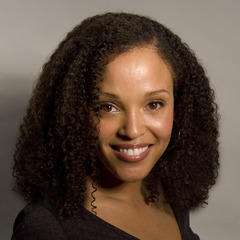
People ask me all the time, 'Why did I move home?' As well as I can articulate it, that's why. I moved home because I love the community that I come from.
Jesmyn WardRead
45 quotes
People ask me all the time, 'Why did I move home?' As well as I can articulate it, that's why. I moved home because I love the community that I come from.
There was nothing postracial about my experience, and there still isn't.
A lot of times, real life is more surreal than writing.
My people are still poor. They're still working class. All of the characters that I write about are inspired by the community that I'm from.
I do think that people will claim a certain fatigue about talking about race. But I think that even though they do, it's still necessary - completely necessary.
If I'm honest about the people that I love, then I need my characters to live through the same things that the people I love and care about are living with and struggling with.
I think that often in the United States we're very blind to the ways that history lives in the present.
While I admire writers who are able to write with a vitality based on order and action, I work in a different vein. I often feel that if I can get the language just right, the language hypnotizes the reader.
It's impossible for most black Americans to construct full family trees. Official census records, used by so many genealogy enthusiasts to piece together their families' pasts, don't include our non-European ancestors.
I wrote the first draft of my first novel at Michigan, and then I wrote the first draft of 'Salvage the Bones' at Stanford. So I workshopped the entire thing.
It infuriates me that the work of white American writers can be universal and lay claim to classic texts, while black and female authors are ghetto-ized as 'other.'
Sometimes, you get tired of fighting. I think you just sort of come to this realization that yes, that you will get tired, but that doesn't mean that you can give up the fight.
I love where I'm from. I love the landscape because it is so beautiful, and I also love the people of my community, the people whose stories I'm trying to tell.
My brother died when he was 19, so a part of me indulges and thinks that some part of him that made him uniquely him is out there, on another plane. So inventing the fictional afterlife in 'Sing, Unburied, Sing' was a way of making that wish real.
There is power in naming racism for what it is, in shining a bright light on it, brighter than any torch or flashlight. A thing as simple as naming it allows us to root it out of the darkness and hushed conversation where it likes to breed like roaches. It makes us acknowledge it. Confront it.
There's so much I love about home, but then there's a lot that I can acknowledge that I dislike about home. And acknowledging that to myself helps me see that place more clearly and to bring readers to that place.
As an artist, I feel a certain responsibility to write about difficult subject matter.
On one hand, I am very pessimistic, but on the other hand, if I didn't believe that speaking up would do something, I wouldn't have spoken.
I've been in so many writing workshops where someone hands in a story, and when the other writers in the workshop are giving feedback, they say, 'This is unbelievable.' And the writer says, 'Well, actually, the events are based in real life. This actually happened.'
That larger story in 'Salvage the Bones' is just about survival, and I think that, in the end, there are things about this novel and about these characters' experiences that make their stories universal stories.
Even though I read voraciously as a child, I never saw myself in books. Without narratives to expand my ideas of who I could be, I accepted the stories others told me about myself, stories which diminished and belittled me and people like me. I want to write against that.
Subscribe for the occasional hand-picked quote. No noise.