Humor is a means of obtaining pleasure in spite of the distressing effects that interface with it.
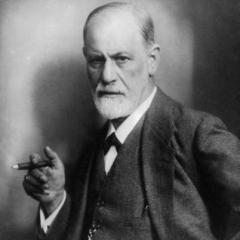
Sigmund FreudRead
137 quotes
Humor is a means of obtaining pleasure in spite of the distressing effects that interface with it.
Human life in common is only made possible when a majority comes together which is stronger than any separate individual and which remains united against all separate individuals. The power of this community is then set up as right in opposition to the power of the individual, which is condemned as brute force.
The moment a man questions the meaning and value of life, he is sick, since objectively neither has any existence; by asking this question one is merely admitting to a store of unsatisfied libido to which something else must have happened, a kind of fermentation leading to sadness and depression.
There is a psychological technique which makes it possible to interpret dreams, and ... if that procedure is employed, every dream reveals itself as a psychical structure which has a meaning and which can be inserted at an assignable point in the mental activities of waking life.
I do not think our successes can compete with those of Lourdes. There are so many more people who believe in the miracles of the Blessed Virgin than in the existence of the unconscious.
Civilization has little to fear from educated people and brain-workers. In them the replacement of religious motives for civilized behaviors by other, secular motives, would proceed unobtrusively. . . .
Conservatism, however, is too often a welcome excuse for lazy minds, loath to adapt themselves to fast changing conditions.
I cannot face with comfort the idea of life without work; work and the free play of the imagination are for me the same thing, I take no pleasure in anything else.
Every normal person, in fact, is only normal on the average. His ego approximates to that of the psychotic in some part or other and to a greater or lesser extent.
The ego refuses to be distressed by the provocations of reality, to let itself be compelled to suffer. It insists that it cannot be affected by the traumas of the external world; it shows, in fact, that such traumas are no more than occasions for it to gain pleasure.
It sounds not only disagreeable but also paradoxical, yet it must nevertheless be said that anyone who is to be really free and happy in love must have surmounted his respect for women and have come to terms with the idea of incest with his mother or sister.
It is a predisposition of human nature to consider an unpleasant idea untrue, and then it is easy to find arguments against it.
Against the suffering which may come upon one from human relationships the readiest safeguard is voluntary isolation, keeping oneself aloof from other people. The happiness which can be achieved along this path is, as we see, the happiness of quietness. Against the dreaded external world one can only defend oneself by some kind of turning away from it, if one intends to solve the task by oneself.
A collection to which nothing can be added and from which nothing can be removed is, in fact, dead!
We must reckon with the possibility that something in the nature of the sexual instinct itself is unfavorable to the realization of complete satisfaction.
One feels inclined to say that the intention that man should be 'happy' is not included in the plan of Creation.' . . . We are so made that we can derive intense enjoyment only from a contrast and very little from a state of things.
It would be one of the greatest triumphs of humanity, one of the most tangible liberations from the constraints of nature to which mankind is subject, if we could succeed in raising the responsible act of procreating children to the level of a deliberate and intentional activity and in freeing it from its entanglement with the necessary satisfaction of a natural need.
There is little that gives children greater pleasure than when a grown-up lets himself down to their level, renounces his oppressive superiority and plays with them as an equal.
Only a good-for-nothing is not interested in his past.
I think that in general it is a good plan occasionally to bear in mind the fact that people were in the habit of dreaming before there was such a thing as psychoanalysis.
I cannot face the idea of life without work. What would one do when ideas failed or words refused to come? It is impossible not to shudder at the thought.
Subscribe for the occasional hand-picked quote. No noise.