Ordinarily we are swept away by habitual momentum and don't interrupt our patterns slightly. When we feel betrayed or disappointed, does it occur to us to practice?
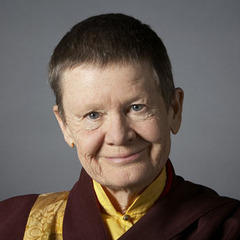
Pema ChodronRead
156 quotes
Ordinarily we are swept away by habitual momentum and don't interrupt our patterns slightly. When we feel betrayed or disappointed, does it occur to us to practice?
There's a reason you can learn from everything: you have basic wisdom, basic intelligence, and basic goodness.
You're the only one who knows when you're using things to protect yourself and keep your ego together and when you're opening and letting things fall apart, letting the world come as it is - working with it rather than struggling against it. You're the only one who knows.
If we want there to be peace in the world, we have to be brave enough to soften what is rigid in our hearts, to find the soft spot and stay with it. We have to have that kind of courage and take that kind of responsibility. That’s the true practice of peace.
The next time you encounter fear, consider yourself lucky. This is where the courage comes in. Usually we think that brave people have no fear. The truth is that they are intimate with fear. When I was first married, my husband said I was one of the bravest people he knew. When I asked him why, he said because I was a complete coward but went ahead and did things anyhow.
When we are willing to stay even a moment with uncomfortable energy, we gradually learn not to fear it.
The first noble truth of the Buddha is that when we feel suffering, it doesn’t mean that something is wrong. What a relief.
Gloriousness and wretchedness need each other. One inspires us, the other softens us.
If you follow your heart, you're going to find that it is often extremely inconvenient.
What you do for yourself, any gesture of kindness, any gesture of gentleness, any gesture of honesty and clear seeing toward yourself, will affect how you experience your world. In fact, it will transform how you experience the world. What you do for yourself, you’re doing for others, and what you do for others, you’re doing for yourself.
We don’t sit in meditation to become good meditators. We sit in meditation so that we’ll be more awake in our lives.
We can begin to open our hearts to others when we have no hope of getting anything back. We just do it for its own sake.
Discomfort of any kind becomes the basis for practice. We breathe in knowing our pain is shared.
When you open the door and invite in all sentient beings as your guests, you have to drop your agenda.
Now is the only time. How we relate to it creates the future. In other words, if we're going to be more cheerful in the future, it's because of our aspiration and exertion to be cheerful in the present. What we do accumulates; the future is the result of what we do right now.
As we learn to have compassion for ourselves, the circle of compassion for others - what and whom we can work with, and how - becomes wider.
Never give up on yourself. Then you will never give up on others.
Impermanence is a principle of harmony. When we don't struggle against it, we are in harmony with reality.
When there's a disappointment, I don't know if it's the end of the story. It may just be the beginning of a great adventure.
When you begin to touch your heart or let your heart be touched, you begin to discover that it's bottomless.
When we start out on a spiritual path we often have ideals we think we're supposed to live up to. We feel we're supposed to be better than we are in some way. But with this practice you take yourself completely as you are. Then ironically, taking in pain - breathing it in for yourself and all others in the same boat as you are heightens your awareness of exactly where you're stuck.
Subscribe for the occasional hand-picked quote. No noise.