The emotions aren't always immediately subject to reason, but they are always immediately subject to action.
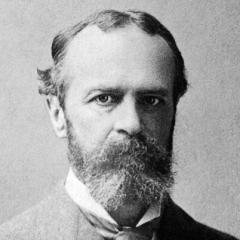
William JamesRead
205 quotes
The emotions aren't always immediately subject to reason, but they are always immediately subject to action.
When thoughts do not neutralize an undesirable emotion, action will.
Act the part and you will become the part.
We must make automatic and habitual, as early as possible, as many useful actions as we can. . . . The more of the details of our daily life we can hand over to the effortless custody of automatism, the more our higher powers of mind will be set free for their own proper work.
The community stagnates without the impulse of the individual. The impulse dies away without the sympathy of the community.
What the whole community comes to believe in grasps the individual as in a vise.
What excites and interests the looker-on at life, what the romances and the statues celebrate, and the grim civic monuments remind us of, is the everlasting battle of the powers of light with those of darkness; with heroism reduced to its bare chance, yet ever and anon snatching victory from the jaws of death.
Much of what we call evil is due entirely to the way men take the phenomenon. It can so often be converted into a bracing and tonic good by a simple change of the sufferer's inner attitude from one of fear to one of fight; its string can so often depart and turn into a relish when, after vainly seeking to shun it, we agree to face about and bear it.
We are all ready to be savage in some cause. The difference between a good man and a bad one is the choice of the cause.
There is no more miserable human being than one in whom nothing is habitual but indecision.
The greatest discovery of my generation is that a human being can alter his life by altering his attitudes.
Do something everyday for no other reason than you would rather not do it, so that when the hour of dire need draws nigh, it may find you not unnerved and untrained to stand the test.
I am done with great things and big things, great institutions and big success, and I am for those tiny, invisible molecular moral forces that work from individual to individual, creeping through the crannies of the world like so many rootlets, or like the capillary oozing of water, yet which if you give them time, will rend the hardest monuments of man's pride.
We are all potentially such sick men. The sanest and best of us are of one clay with lunatics and prison-inmates. And whenever we feel this, such a sense of the vanity of our voluntary career comes over us, that all our morality appears but as a plaster hiding a sore it can never cure, and all our well-doing as the hollowest substitute for that well-being that our lives ought to be grounded in, but alas! are not.
When happiness is actually in possession, the thought of evil can no more acquire the feeling of reality than the thought of good can gain reality when melancholy rules. To the man actively happy, from whatever cause, evil simply cannot then and there be believed in.
We never fully grasp the import of any true statement until we have a clear notion of what the opposite untrue statement would be.
[Religion is] the attempt to be in harmony with an unseen order of things.
The god whom science recognizes must be a God of universal laws exclusively, a God who does a wholesale, not a retail business. He cannot accommodate his processes to the convenience of individuals.
We forget that every good that is worth possessing must be paid for in strokes of daily effort.
He who refuses to embrace a unique opportunity loses the prize as surely as if he had failed.
The greatest weapon we have to combat stress is the ability to choose our thoughts.
Subscribe for the occasional hand-picked quote. No noise.