Tout est poison, rien n'est poison, tout est une question de dose. Everything is poisonous, nothing is poisonous, it is all a matter of dose.
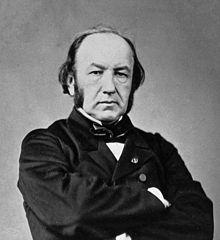
Claude BernardRead
20 quotes
Tout est poison, rien n'est poison, tout est une question de dose. Everything is poisonous, nothing is poisonous, it is all a matter of dose.
When a physician is called to a patient, he should decide on the diagnosis, then the prognosis, and then the treatment. ... Physicians must know the evolution of the disease, its duration and gravity in order to predict its course and outcome. Here statistics intervene to guide physicians, by teaching them the proportion of mortal cases, and if observation has also shown that the successful and unsuccessful cases can be recognized by certain signs, then the prognosis is more certain.
The goal of scientific physicians in their own science ... is to reduce the indeterminate. Statistics therefore apply only to cases in which the cause of the facts observed is still indeterminate.
Theories are like a stairway; by climbing, science widens its horizon more and more, because theories embody and necessarily include proportionately more facts as they advance.
True science teaches us to doubt and, in ignorance, to refrain.
Now, a living organism is nothing but a wonderful machine endowed with the most marvellous properties and set going by means of the most complex and delicate mechanism.
The experimenter who does not know what he is looking for will not understand what he finds.
In the philosophic sense, observation shows and experiment teaches.
The fact that knowledge endlessly recedes as the investigator is about to grasp it is what constitutes at the same time his torment and happiness.
Man does not limit himself to seeing; he thinks and insists on learning the meaning of phenomena whose existence has been revealed to him by observation. So he reasons, compares facts, puts questions to them, and by the answers which he extracts, tests one by another. This sort of control, by means of reasoning and facts, is what constitutes experiment, properly speaking; and it is the only process that we have for teaching ourselves about the nature of things outside us.
We must never make experiments to confirm our ideas, but simply to control them.
We must alter theory to adapt it to nature, but not nature to adapt it to theory.
The constancy of the internal environment is the condition for free and independent life: the mechanism that makes it possible is that which assured the maintenance, with the internal environment, of all the conditions necessary for the life of the elements.
A man of science rises ever, in seeking truth; and if he never finds it in its wholeness, he discovers nevertheless very significant fragments; and these fragments of universal truth are precisely what constitutes science.
Those who do not know the torment of the unknown cannot have the joy of discovery.
The science of life is a superb and dazzlingly lighted hall which may be reached only by passing through a long and ghastly kitchen.
The doubter is a true man of science: he doubts only himself and his interpretations, but he believes in science.
If I had to define life in a single phrase, I should clearly express my thought of throwing into relief one characteristic which, in my opinion, sharply differentiates biological science. I should say: life is creation.
First causes are outside the realm of science.
It is impossible to devise an experiment without a preconceived idea; devising an experiment, we said, is putting a question; we never conceive a question without an idea which invites an answer. I consider it, therefore, an absolute principle that experiments must always be devised in view of a preconceived idea, no matter if the idea be not very clear nor very well defined.
Subscribe for the occasional hand-picked quote. No noise.