The purpose of an organization is to enable ordinary humans beings to do extraordinary things.
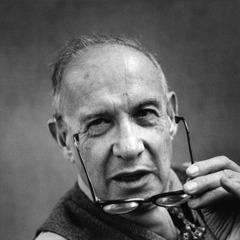
Peter DruckerRead
142 quotes
The purpose of an organization is to enable ordinary humans beings to do extraordinary things.
In the Western tradition, we have focused on teaching as a skill and forgotten what Socrates knew: teaching is a gift, learning is a skill.
We now accept the fact that learning is a lifelong process of keeping abreast of change. And the most pressing task is to teach people how to learn.
The basic economic resource - the means of production -_x000D_ _x000D_ is no longer capital, nor natural resources, nor labor._x000D_ _x000D_ It is and will be knowledge.
Unless commitment is made, there are only promises and hopes... but no plans.
The strength of the computer lies in its being a logic machine. It does precisely what it is programed to do. This makes it fast and precise. It also makes it a total moron; for logic is essentially stupid.
Most discussions of decision making assume that only senior executives make decisions or that only senior executives' decisions matter. This is a dangerous mistake.
Brilliant men are often strikingly ineffectual. They fail to realize that the brilliant insight is not by itself achievement. They never have learned that insights become effectiveness only through hard systematic work.
The most common source of mistakes in management decisions is the emphasis on finding the right answer rather than the right question.
Teaching is the only major occupation of man for which we have not yet developed tools that make an average person capable of competence and performance. In teaching we rely on the 'naturals,' the ones who somehow know how to teach.
I have been saying for many years that we are using the word 'guru' only because 'charlatan' is too long to fit into a headline.
Managing innovation will increasingly become a challenge to management, and especially to top management, and a touchstone of its competence.
Efficiency is doing better what is already being done.
There's no such thing as knowledge management;_x000D_ _x000D_ there are only knowledgeable people._x000D_ _x000D_ Information only becomes knowledge_x000D_ _x000D_ in the hands of someone_x000D_ _x000D_ who knows what to do with it.
Everything requires time. It is the only truly universal condition. All work takes place in time and uses up time. Yet most people take for granted this unique, irreplaceable, and necessary resource. Nothing else, perhaps, distinguishes effective executives as much as their tender loving care of time.
In a few hundred years, when the history of our time will be written from a long-term perspective, it is likely that the most important event historians will see is not technology, not the Internet, not e-commerce. It is an unprecedented change in the human condition. For the first time - literally - substantial and rapidly growing numbers of people have choices. For the first time, they will have to manage themselves. And society is totally unprepared for it.
Most of what you hear about entrepreneurshi p is all wrong. It's not magic; it's not mysterious; and it has nothing to do with genes. It's a discipline and, like any discipline, it can be learned.
Now that knowledge is taking the place of capital as the driving force in organizations worldwide, it is all too easy to confuse data with knowledge and information technology with information.
Adequacy is the enemy of excellence.
A business is not defined by its name, statutes, or articles of incorporation. It is defined by the business mission. Only a clear definition of the mission and purpose of the organization makes possible clear and realistic business objectives.
The single most important thing to remember about any enterprise is that there are no results inside its walls. The result of a business is a satisfied customer.
Subscribe for the occasional hand-picked quote. No noise.